
01 — Service
Testing & Inspection
A sprinkler system only works if it is kept in working order. We inspect, test and maintain it so it is ready on the day it is needed.
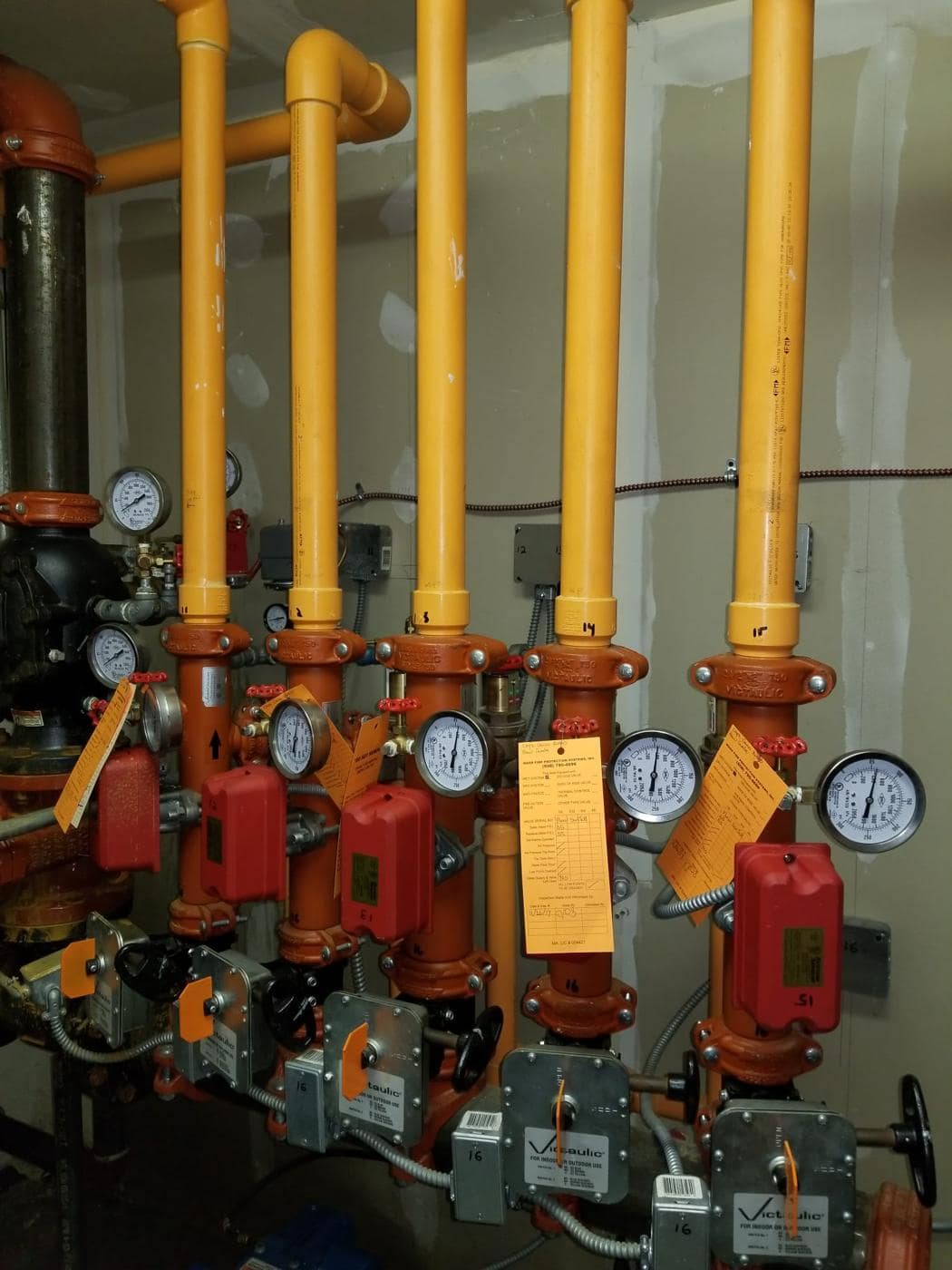
Open the valve. Hear the alarm.
A test is a hands-on check of how the system performs. Waterflow alarms are tested quarterly.
A — What is needed
The purpose of fire sprinklers.
Properly installed and operating fire sprinklers provide automatic fire extinguishing capability in buildings. Automatic fire sprinkler systems have proven to provide the best protection against loss of life and property in the event of a fire.
Fire sprinklers also save money in those buildings experiencing fire losses.
Schools continue to experience fires. A FEMA Topical Fire Research report on school fires listed the average dollar loss per fire for school structure fires at $15,956. 37% of all school structure fires and 52% of middle and high school structure fires were incendiary in origin (intentionally set), and the leading area of fire origin was the school lavatory.
B — How fire sprinklers work
One head at a time.
Contrary to what is often depicted in movies, automatic fire sprinkler systems do not release water throughout the entire building all at once. Sprinkler heads are activated individually by the fire.
When the heat of a fire raises the ceiling temperature to the sprinkler head’s operating point (usually 165°F), a solder link will melt or a liquid-filled glass bulb will shatter to open that single sprinkler head, releasing water directly over the source of the heat.
The sprinkler heads are tied into a network of piping with water under pressure. As the system is activated, an alarm is sounded to alert the building occupants and the fire department (if monitored).
C — Inspection and maintenance requirements
Inspected, tested and maintained.
The fire sprinkler system, like other systems, needs to be inspected, tested and maintained to ensure it will function in the event of a fire. According to NFPA, the leading factors in unsatisfactory sprinkler performance include failure to maintain the operational status of the system: inadequate maintenance, obstruction of the water distribution, and a frozen system.
Requirements for inspection, testing and maintenance depend on your building and your local fire code. NFPA 25 is the standard for water-based fire protection systems, and your local fire department can confirm what applies to your building. Fire sprinkler inspections should be conducted by a qualified person.
Although some inspections can be done by qualified in-house maintenance personnel, we recommend that sprinkler system testing and maintenance be done by a licensed sprinkler company.
NFPA 25, Table 2-1
The schedule, item by item.
- GaugesInspectionWet pipe systems: monthly. Dry, preaction and deluge systems: weekly
- Control valvesInspectionSealed valves: weekly. Locked valves or valves with tamper switches: monthly
- Alarm valvesInspectionExterior: monthly. Interior: 5 years
- Dry pipe valvesInspectionEnclosure (cold weather): weekly. Exterior: monthly. Interior: annually
- Alarm devicesInspectionQuarterly
- Hydraulic nameplateInspectionQuarterly
- Adequate heat in buildingsInspectionAnnually (prior to freezing)
- Pipe hangers and seismic bracingInspectionAnnually
- Pipe and fittingsInspectionAnnually
- Sprinkler headsInspectionAnnually
- Spare sprinkler heads and sprinkler wrenchInspectionAnnually
- Fire department connectionsInspectionQuarterly
- Pressure reducing valvesInspectionQuarterly
- Check valvesInspectionInterior: every 5 years
- Waterflow alarmsTestQuarterly
- Alarm devicesTestQuarterly
- Main drainTestAnnually
- Antifreeze solutionTestAnnually
- GaugesTest5 years
- Sprinkler headsTestExtra high temperature: every 5 years. Fast response: at 20 years, then every 10. All others: at 50 years, then every 10
- Valves (all types)MaintenanceAnnually or as needed
- Low point drains (dry pipe system)MaintenanceAnnually prior to freezing and as needed
- Obstruction investigationMaintenance5 years or as needed
NFPA 25, Table 2-1 · 23 of 23 items
Summary
Records of all sprinkler system inspections, tests and maintenance should be kept for at least five years. Keeping the fire sprinkler system on this schedule helps ensure safety and the preservation of property.
For more information about fire sprinklers, contact us.
Next
Also from Solution Fire Prevention.
Get a free quote
Ready when you are.
Tell us about your building. We answer during business hours, Mon to Fri, 8:00 AM to 4:30 PM.